
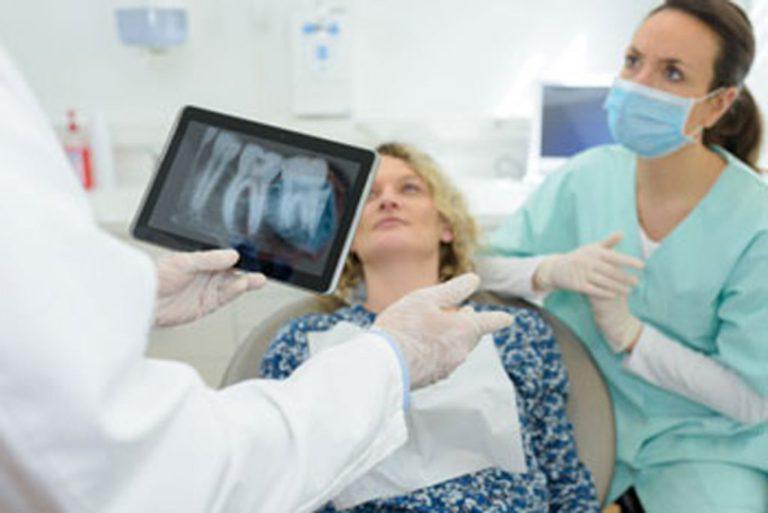
Oral Cancer Examination
Did you know that approximately 4,500 Canadians were diagnosed with oral cancer in 2017? Oral cancer is not an issue that is often regularly discussed nor given much attention to. Having a lack of awareness for disease can pose a significant threat because if left untreated and it goes relatively unnoticed, it could hinder adequate or appropriate prevention and treatment options. This is especially true for those who do not go to regular dental visits. Your dentist in Kemptville, Dr. Besher Alfarra of Kemptville Smiles Dentistry, can monitor your oral health and diagnose potential signs of oral diseases beginning to develop with an extensive and thorough oral cancer examination.
What Exactly is Involved?
During a thorough and complete examination, your dentist in Kemptville will inquire about the condition of your health and ask about any medications you may be taking. These inquiries assist your Kemptville dentist in accurately determining the level of risk that you have for developing oral cancer. Underlying health conditions and negative lifestyle habits such as smoking, can contribute to the development of oral cancer.
During this time, the dentist will thoroughly look throughout the facial area – on the surface and inside the mouth – inspecting the lips, jaw, and neck, keeping an eye out for any abnormalities such as lumps, red or white patches inside the mouth, or unusual spots and swelling along the tongue.
How Can I Book An Examination?
If you’re concerned about oral cancer, contact us at Kemptville Smiles Dentistry. We can schedule an examination during your next appointment. If you’ve noticed any unusual lumps or abnormalities around your mouth, face or neck, an examination can pinpoint any areas of concern, allowing treatment to tackle any early developments. When oral cancer is diagnosed during the early stages, the success of treatment is much greater. And if anything does look suspicious, we will refer you to a specialist so you can receive the treatment and care you need as soon as possible. If you notice any areas of concern in or around your mouth, Contact Us at (613) 258-7373 to book an appointment. Our team members will provide a thorough examination and recommend the best course of action if anything appears abnormal. Remember, detecting cancer during the early stages can allow treatment to be very effective.
How to handle certain dental emergencies:
Avulsed tooth (knocked-out tooth):
When a tooth gets knocked out from trauma, the oral tissues become damaged and it can be difficult for them to heal on their own. In most cases, a tooth can be placed back into position if you get to the dentist promptly.
If your tooth gets knocked out follow these steps:
- 1. Call our office at (613) 258-7373.
- 2. Pick up the tooth and rinse it under warm water. DO NOT touch the root.
- 3. Place the tooth back into its socket if possible – if not tuck it into your cheek.
- 4. If the tooth cannot be placed back in the mouth, place it in a cup of milk, saliva, or water as a last resort. It is important that the tooth does not dry out.
- 5. See your dentist as soon as possible.
We will try our best to replace the tooth in its natural socket, but if damage is too severe then root canal therapy might be necessary.
Lost filling or crown:
When a crown or filling comes loose it’s often while eating. Once out of the mouth, the affected tooth can be very sensitive to temperature changes and pressure. Generally crowns become loose because of decay beneath the tooth. The decay causes shape changes in the teeth which can cause problems with the fit of the crown.
Make a dental appointment as soon as possible if you lose a dental crown or filling. Crowns can be reinserted so it is important to keep them in a cool, safe place. If the crown is out of the mouth for a long period of time, the teeth may shift and cause further damage.
Cracked or broken teeth:
Teeth are strong, but still prone to fractures. Sometimes cracks that don’t extend down into the root might cause minor discomfort when eating something hot. However, if it is a deeper injury and your tooth has been cracked or broken then you should see us as soon as possible because extraction might become necessary.
If a segment of your tooth has been broken off, here are some steps that can be taken at home:
- 1. Call our office at (613) 258-7373.
- 2. Rinse the tooth and mouth with lukewarm water.
- 3. Apply gauze to the area for ten minutes if there is bleeding.
- 4. Place a cool, damp cloth on the cheek to help with swelling and relieve any pain.
- 5. Take a topical pain reliever.
The nature of a tooth’s break or fracture will determine what we are able to do at our dental office. If the crack extends into the root, then this may be a situation where a root canal is needed. Though root canal treatment should only proceed when all other options have been exhausted.
Dislodged/loose teeth:
Your dentist will reposition the tooth and stabilize it. If the tooth fails to heal you may require a root canal. The process of a root canal helps to save the tooth by removing any bacteria in its interior so it can no longer cause pain but also prepares the mouth before installing crowns and bridges. If this procedure is done early enough there’s less risk of complications occurring in the future.
It is important to call our office immediately if you have a loose or dislodged tooth. Prior to getting to the office, use a cold compress and over-the-counter medications to relieve pain.
If you are experiencing a dental emergency please contact our office at (613) 258-7373.