
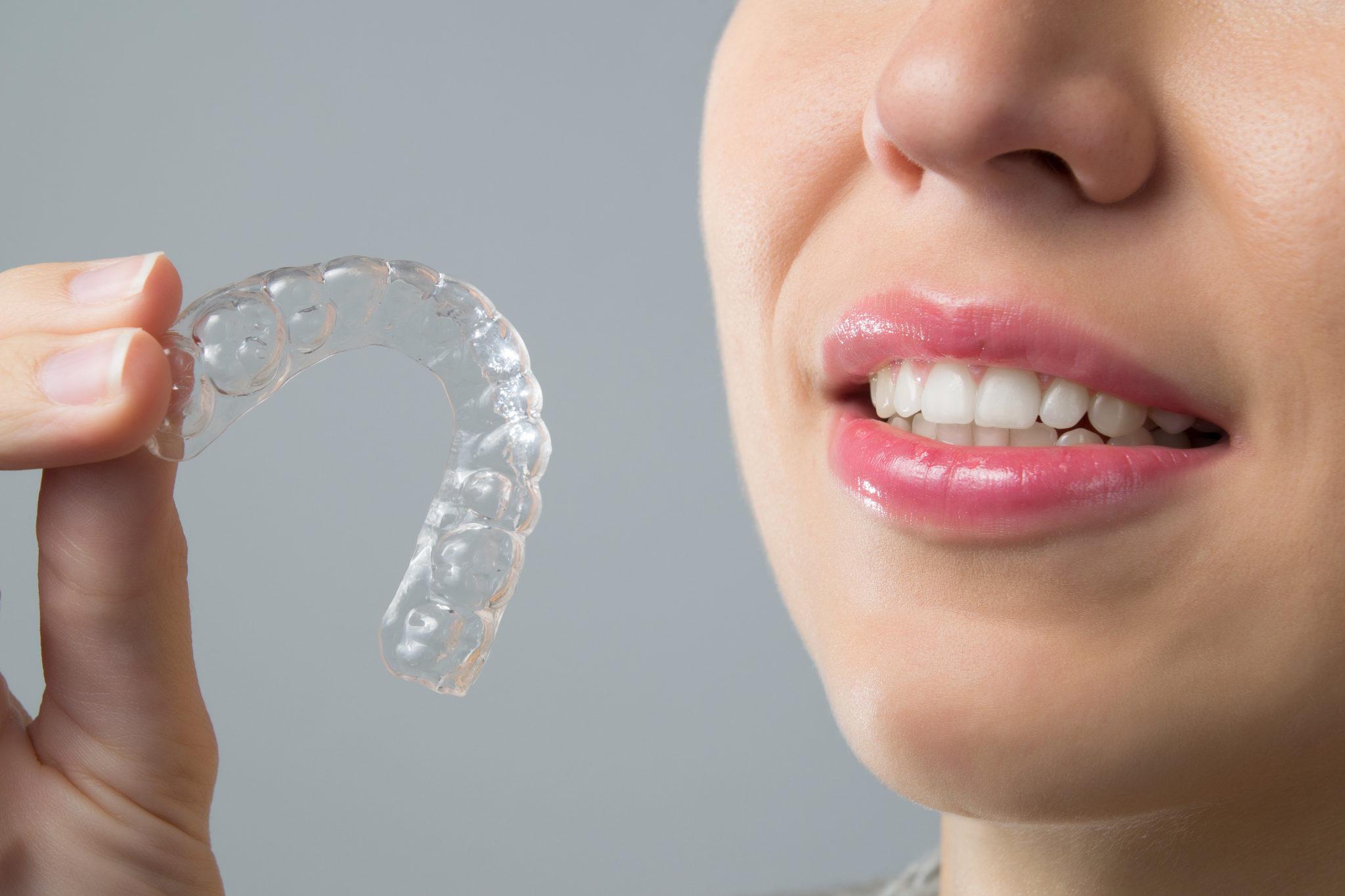
Invisalign Treatment
At Kemptville Smiles Dentistry in Kemptville, ON, we use dental digital scanning and Invisalign clear aligner techniques to treat patients.
We’re proud of our Itero Element Digital Scanning unit, and we’re more than happy to show you how it works on your visit. Here are some of its features:
- 1. Quick and Easy Scanning: There’s no need to open your mouth too wide and for a long period. The process is easy even for those with gag reflex
- 2. 3D Images in Minutes: No more goopy impressions. We can produce 3D images of your mouth within minutes.
- 3. Improved Diagnosis and Treatment: High-resolution images allow for more accurate findings and custom treatment plans.
- 4. More Effective Patient Education: You see what your dentist sees in real-time. It’s easier to understand where the issues are in your mouth and how they can be fixed.
- 5. Faster Turnaround Time: We no longer need to forward models to the lab. We can create impressions in-office and customize treatment plans while you’re in the dental chair.
- 6. Integrated state-of-the-art Technology: We can complete the procedure here in our office with the Itero scanning unit and the Invisalign Orthodontic technique.
What is Invisalign?
The Invisalign system offers a non-intrusive method to shift teeth to their proper position. You can achieve the smile you desire without people knowing.
The procedure uses 3D computer imaging technology that lets us map out a complete treatment plan while you’re in the dental chair, all in a single visit.
We show you the initial position of your teeth down to the final position. We customize a series of virtually-invisible aligners for your teeth to move and straighten them out little by little.
Wear each aligner for about one to two weeks before moving to the next aligner in the series. We do this until we reach the final position of your teeth.
We create an individualized treatment plan based on your specific needs. Every set of Invisalign aligners is unique as it’s made for its user.
What are the primary benefits of Invisalign?
- 1. Clear: Invisalign doesn’t interfere with your daily activities. The aligners are practically invisible, so no one may even tell you’re getting dental treatment. Invisalign easily fits into your lifestyle and day-to-day interactions, whether you’re a student, athlete, or working professional.
- 2. Convenient: The clear plastic aligners are made for you, so they also fit snugly around your teeth. You won’t have to deal with a bulky and obvious appliance in your mouth.
- 3. Removable: Enjoy eating food you love. You won’t have to change your diet or food preferences. You can remove your aligners before eating or drinking and wear them again afterward. You can also brush and floss your teeth as you normally would to keep them clean and healthy, and your breath fresh.
- 4. No metal brackets: Skip the awkward phase when fixing your smile. Invisalign doesn’t use metal brackets or wires that can poke through your cheeks or gums. The plastic aligners are comfortable and won’t irritate your mouth. You’ll spend less time in the dental office as you no longer need to have metal or wire adjustments.
- 5. No interruption: Whether you’re playing sports, eating your favorite food, bonding with friends, or meeting clients, Invisalign lets you do it all as you would. Your life goes on while your aligners work to improve your smile.
- 6. Accurate: Invisalign uses the Itero Element scanner that allows us to view your teeth before and after the treatment. You can see how your teeth will improve throughout the procedure even before starting. We reduce the risks of errors and rejections as we’re not using physical impressions.
Who is a good candidate for Invisalign aligners?
Invisalign can address various issues, including protruding and crowded teeth. Anyone can be a good candidate. But the procedure is usually recommended to older teens and adults. You may consider Invisalign if you want a tooth straightening option that doesn’t affect your eating habits and daily activities.
What age can you get Invisalign?
The average is around 12-13 years old, but even younger children can start the treatment. It depends on the child’s ability to commit and follow instructions. You must wear your aligners for at least 20-22 hours per day for the treatment’s success. Your dentist can assess whether your child is ready for Invisalign.
How many aligner trays do you typically get during Invisalign treatment?
You receive around 20-30 aligners to get to your desired final teeth position. The milder the case, the fewer aligners you need to wear. The more complex the issue, the more aligners you’ll require.
How do I clean Invisalign aligner trays?
Cleaning your Invisalign aligner trays is necessary to keep plaque and deposits from building up. Rinse them once in a while with plain water or soak them in warm water or a cleaning solution your dentist prescribed. You can also brush them using a soft-bristled toothbrush. Rinse and put them back on afterward or store them in a protective case.
Ready to see your new smile with Invisalign?
Invisalign removes the guesswork in enhancing smiles. We map out every tiny shift your teeth will be making.
Kemptville Smiles Dentistry offers complimentary consultations for Invisalign. We’re more than happy to answer your questions about this convenient way of crafting the smile you want.
Contact us today at to book yours. We’re excited to meet you here in our dental office at Kemptville, ON.
For many years the only viable corrective procedure available to realign crooked teeth has been conventional wire and metal braces or retainers. Although these options are demonstrably effective at correcting your misaligned teeth, they, unfortunately, come with certain downsides. For one, metal braces can be physically uncomfortable as they do not conform to your teeth. This creates a number of edges that can catch on to your cheeks or lips, potentially causing injury or discomfort.
How to handle certain dental emergencies:
Avulsed tooth (knocked-out tooth):
When a tooth gets knocked out from trauma, the oral tissues become damaged and it can be difficult for them to heal on their own. In most cases, a tooth can be placed back into position if you get to the dentist promptly.
If your tooth gets knocked out follow these steps:
- 1. Call our office at (613) 258-7373.
- 2. Pick up the tooth and rinse it under warm water. DO NOT touch the root.
- 3. Place the tooth back into its socket if possible – if not tuck it into your cheek.
- 4. If the tooth cannot be placed back in the mouth, place it in a cup of milk, saliva, or water as a last resort. It is important that the tooth does not dry out.
- 5. See your dentist as soon as possible.
We will try our best to replace the tooth in its natural socket, but if damage is too severe then root canal therapy might be necessary.
Lost filling or crown:
When a crown or filling comes loose it’s often while eating. Once out of the mouth, the affected tooth can be very sensitive to temperature changes and pressure. Generally crowns become loose because of decay beneath the tooth. The decay causes shape changes in the teeth which can cause problems with the fit of the crown.
Make a dental appointment as soon as possible if you lose a dental crown or filling. Crowns can be reinserted so it is important to keep them in a cool, safe place. If the crown is out of the mouth for a long period of time, the teeth may shift and cause further damage.
Cracked or broken teeth:
Teeth are strong, but still prone to fractures. Sometimes cracks that don’t extend down into the root might cause minor discomfort when eating something hot. However, if it is a deeper injury and your tooth has been cracked or broken then you should see us as soon as possible because extraction might become necessary.
If a segment of your tooth has been broken off, here are some steps that can be taken at home:
- 1. Call our office at (613) 258-7373.
- 2. Rinse the tooth and mouth with lukewarm water.
- 3. Apply gauze to the area for ten minutes if there is bleeding.
- 4. Place a cool, damp cloth on the cheek to help with swelling and relieve any pain.
- 5. Take a topical pain reliever.
The nature of a tooth’s break or fracture will determine what we are able to do at our dental office. If the crack extends into the root, then this may be a situation where a root canal is needed. Though root canal treatment should only proceed when all other options have been exhausted.
Dislodged/loose teeth:
Your dentist will reposition the tooth and stabilize it. If the tooth fails to heal you may require a root canal. The process of a root canal helps to save the tooth by removing any bacteria in its interior so it can no longer cause pain but also prepares the mouth before installing crowns and bridges. If this procedure is done early enough there’s less risk of complications occurring in the future.
It is important to call our office immediately if you have a loose or dislodged tooth. Prior to getting to the office, use a cold compress and over-the-counter medications to relieve pain.
If you are experiencing a dental emergency please contact our office at (613) 258-7373.